
filter posts:
Date
February 2, 2026
From Terrorist to Evangelist
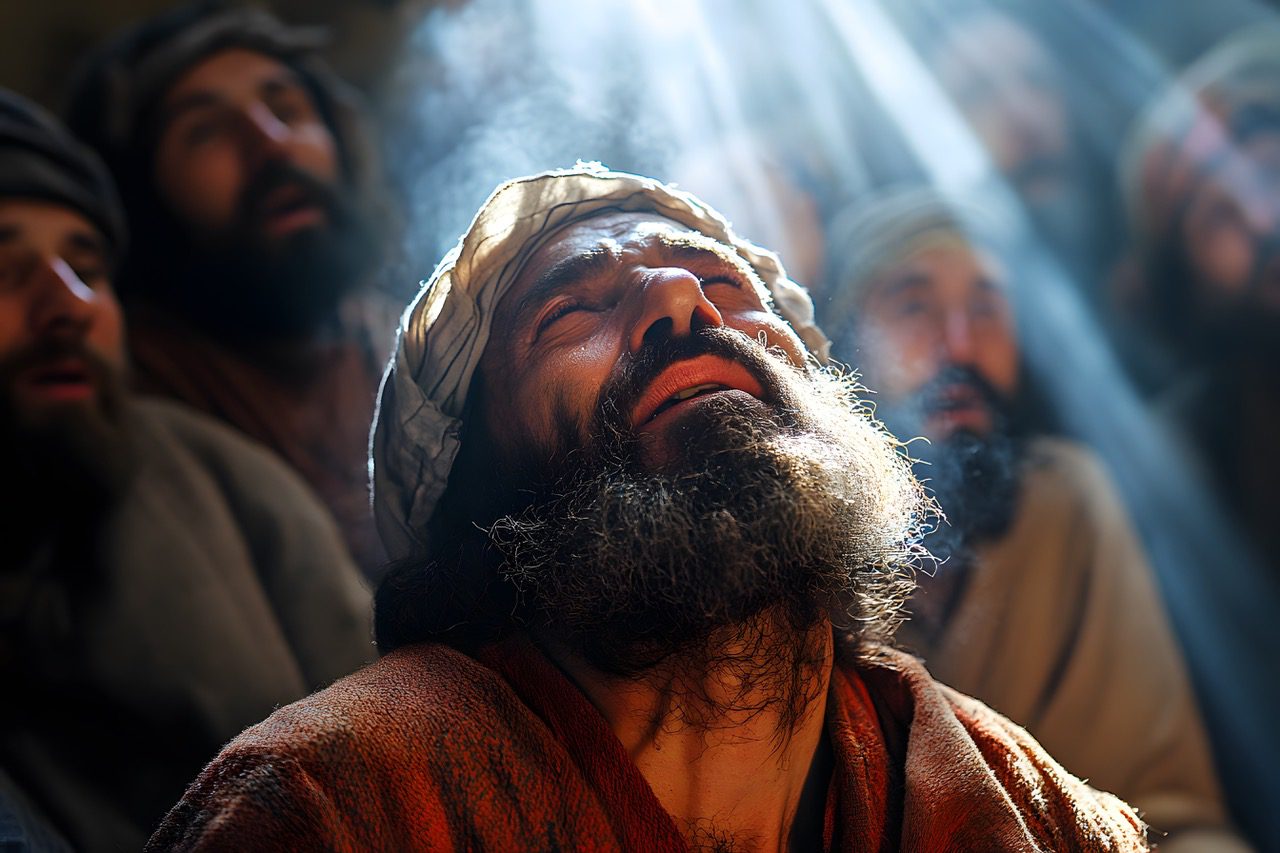
We know that the conversion of Saul, from terrorist to evangelist and from murderer to martyr, is one of the evidences in the Bible for the truth of the Gospel. It is almost Exhibit A in the New Testament that salvation is only by grace through faith, and not through good works. Why? Paul was a Pharisee of Pharisees, a young man who stood head and shoulders above others in his zeal for following the law, in his passion for doing good works for God. Paul writes to Timothy, saying, “I was a blasphemer, persecutor, and insolent.” But, he said, “The saying is trustworthy and deserving of full acceptance, that Christ Jesus came into the world to save sinners, of whom I am the foremost. But I received mercy for this reason, that in me, the foremost, Jesus Christ might display his perfect patience as an example to those who were to believe in him for eternal life.” He is not saying that God showed mercy because of something He saw in Paul! But that Paul is a perfect example, like the rest of us, that there is no merit whatsoever in us but perfect merit in Christ who took our place. If you are in Christ, it is because God displayed perfect patience in calling you before you were even in your mother’s womb, and saving you at the time of His choosing. That’s the Gospel.
Notice what Paul says about his conversion in Galatians. First, he says that Jesus set him apart before he was born. Before Paul entered his mother’s womb, God had ordained that Paul would know Jesus. And think of this. God endured with patience as Paul advanced in Judaism and in works-righteousness. And the same misplaced zeal that Paul grew skilled in to advance works-righteousness, the false gospel, would be employed by the Spirit, this zeal, in a new Paul to advance the Kingdom of God and salvation by grace through faith! I love the story CS Lewis tells in his book, Surprised by Joy of a teacher he had in school who was nicknamed “The Great Knock,” and “Kirk.” William Kirkpatrick was a brilliant tutor who trained Lewis as a young man in logic, clear thinking, and analysis. And Kirk was an atheist whose rationalism formed Lewis in that same mold. Until Jesus, who had set CS Lewis apart before he was born, gave the light of the Gospel to him. And then? Lewis’ training in logic and clear thinking prepared him well to become one of the greatest defenders of the Christian faith in his day. Here’s the truth, saints. Nothing is wasted with God and all that you have learned and all that you have suffered become the tools God uses in you to be salt and light in the world.
Second, Paul says that not only was he set apart before birth but at the right time, God “was pleased to reveal his Son to me.” God revealed Christ to Paul so that He could reveal Christ through Paul. It is the same for you and me! Ironically, Paul was called by Jesus to preach the Gospel to the Gentiles, the very people Paul would have avoided like the plague before his conversion. Notice also that your Bible may have a footnote that says the Greek there is actually “in.” God revealed his Son, not just to Paul, but in Paul. Salvation is only ours when we have Jesus in us. “Christ in us, the hope of glory.”
You don’t have to be a terrorist to have a miraculous conversion. Any conversion of any soul is a miracle. Neither do you have to be “blinded by the light” to be saved. You just have to meet and surrender to the One who is light.
Only Jesus.
February 2, 2026
When Good Friends Pray Together

Thomas Edison said once, “I have friends in overalls whose friendship I would not swap for the favor of the kings of the world.” That’s the way I feel about the 6 men I serve alongside as elders of our church. Many of us have walked together for more than twenty years, and the weekly meetings for prayer and discussion on Sunday morning are a highlight of my week. We meet together almost every Sunday for two hours before the service starts because we know that we need the Lord’s help to love the body well and to walk together as those who agree. The seven of us are different in many ways, from professions to personalities, but God has made us one.
This past weekend was our annual Elders’ Retreat, which has traditionally been spent with our wives in the mountains at a conference center. Until last year when, because of icy roads in Black Mountain, we called an audible and met at one of our elders’ homes in town. This year, because of last year’s weather in the west, we booked a beach house on the Carolina coast. Who knew that the threat of a “major” snow and ice event would force us to pivot again to another of our elders’ homes? It was a wonderful day and a half together.
When we gather for these retreats, the purpose is to build our relationships, assess the past year’s joys and challenges, and seek the Lord’s wisdom for the year ahead. One of the elders started the retreat with a few icebreakers. “Would you rather lead worship without any sheet music or preach a sermon without any notes?” Lots of laughter on that one. The second question was, “Would you rather debate theology or hear someone’s life story?” I was surprised at the number of theologians in our group who are ready to rumble! By the way, I recommend Jen Wilkin’s book, You Are a Theologian. She builds the case that if theology is the study of God, all who belong to Him are theologians, growing in our understanding of who God is and what He has said to us in His word. If the most important thing about us is what we think about God, the pursuit to truly know Him is primary in our lives.
The ice breaker questions were followed by devotions and worship and a time of prayer.
The rest of the retreat, when we weren’t enjoying great food and fellowship, was spent discussing the health of our body, the needs of the saints, and the plans for taking care of the growth the church is enjoying. We are outgrowing our facility and asking the Lord for wisdom. As we consider whether He is leading us to merge with another church that has more space, or to add on to the building that we are in now, our posture is prayer and our ears are open to what the Lord will answer. Our history of nearly 39 years bears the marks of His handprints as the Lord has provided a place for us to gather from the time we started with fewer than 50 until today. We have been in the same building for 23 years, and it is the tenth place where we have gathered for worship. What were the words of the hymn? “All the way, my Savior leads me.” Yes, and He has been faithful to provide. As we talked and laughed and sometimes cried this weekend, we did so as friends whom God has called together to love and lead.
I don’t know any kings, and I don’t think any of our elders or their wives wear overalls, but I wouldn’t trade our friendship for any of the world’s treasures.
January 26, 2026
No Other Gospel
The letter to the Galatians is considered by many to be a “capital epistle” of the Apostle Paul, along with 1 and 2 Corinthians and Romans, because of how clearly it sets forth the Gospel. Written around AD 50, just 20 years or so after the resurrection of Christ, Galatians is called by some the Magna Carta of Christian liberty. Martin Luther loved Galatians so much he called it “Catherine von Bora,” his wife’s name, because he said, “I am married to it.” Along with Romans, Galatians is the book that launched the Protestant Reformation in the 1500’s as it liberated that Catholic monk from works righteousness and helped him clearly see the doctrine of justification by faith alone. That is the central doctrine of Galatians, and in it we read, “Yet we know that a person is not justified by works of the law but through faith in Jesus Christ, so we also have believed in Christ Jesus, in order to be justified by faith in Christ and not by works of the law, because by works of the law no one will be justified.” Do you see that? Not once, not twice, but three times in that single verse Paul insists that we cannot be justified (or, declared righteous) before the bar of God’s justice by doing the works of the law. The good news of the Gospel is only good news if it is the Gospel. Anything else, anything added, reverses the Gospel so that it becomes terrible news.
The Gospel is this. Christ “…gave himself for our sins to deliver us from the present evil age, according to the will of our God and Father, to whom be glory forever and ever.” Notice three things about that powerful truth.
The Gospel tells us who we are. We are helpless and lost in our sins. That’s what the word “deliver” implies in that verse. What do we need more than anything else? To be rescued. Delivered. Other religions were founded by people who claim to have the knowledge we need that will set us free. They are here to teach us, they say, because that’s what we need most. Was Jesus a teacher? Of course. The greatest of all teachers. But Paul in describing the Gospel in its simplest terms makes no mention of Jesus’ teaching. Because that was not as important as rescue. A man who thinks he just needs to really understand the difference between Buddhism and Christianity is not looking to be rescued. He just wants to be taught. But when a person is drowning right in front of you in a pool, they don’t want you to yell to them how to do the breaststroke or toss them a manual on swimming. They need a rope. They need someone to deliver them, to rescue them. Jesus is first our rescuer before he becomes our teacher.
The Gospel tells us what Jesus did. He “gave himself for our sins.” That is substitutionary atonement. He took our place because no one else could. Paul says it plainly also in 1 Corinthians: “For I delivered to you as of first importance what I also received: that Christ died for our sins in accordance with the Scriptures.” This is of first importance because there is no other hope, no other way, no other rescue. He did not die for all, but for all those who will believe. He said himself that he came to “give his life as a ransom for many.” He also did not die to just give us a “second chance” to do better, to get it right so we could be right and stay right with God. No! He did all that was needed to make us right before God, something we are helpless to do ourselves. And the Gospel means that if Jesus really paid for all of our sins we can never fall into condemnation and then have to…pay for our sins. It would be unjust for two payments to be made. Jesus paid it all. It was just for Him to die on the cross because He took our sins upon Himself. It is unjust for us to have to do anything to win God’s favor. Jesus won that for us.
Third, the Gospel tells us what the Father did in the very first verse of this book. God the Father accepted Jesus’ perfect payment for our sins by raising Him from the dead. And He gave us grace and peace that was bought by Jesus’ precious blood. Why did the Father do this? Not because of anything we have done, but “according to the will of God the Father.” The Gospel begins and continues and flourishes for eternity because of the will of God. Not because of anything we did or could ever do. Salvation is pure grace.
Are you living in and flourishing because of the Gospel? There is no other.
January 19, 2026
January 18, 2026
Gospel Culture

The gospel is paid for by blood and empowered by grace, and I believe every church that stays healthy will do everything it can to build a gospel culture, a grace-filled community, where the body of Christ can flourish.
I remember the story of the young man with long greasy hair that walked into a ‘proper’ church on a Sunday morning. His jeans were ripped and dirty, his t-shirt smelly and stained, and his feet were bare. He wandered down the aisle looking for a place to sit, but none of the shocked parishioners would make eye contact. He finally plopped down on the floor in front of the first pew. No one breathed. Finally an elderly deacon began to make his way down the center aisle, and the people sighed and nodded. At least Deacon Jones is going to set this young man straight, they thought. Coming into our church looking and smelling like that! But when the deacon got to the front, he did the unthinkable. He dropped his cane and sat beside the young man on the floor, nodding at him as if to say, “Welcome. I am glad you’re here.” When the pastor came to the pulpit, he said, “What I am about to preach, you may not remember. But what you have just seen, you will never forget.”
What they saw was gospel culture.
Francis Schaeffer spoke at a conference in Switzerland in 1974 on the topic of “Form and Freedom in the Church.” He said there are four essentials to a healthy biblical church, which of course include sound doctrine and real relationship with the God who made us. But another essential is “Relational beauty.” Schaeffer said, “Lovelessness destroys orthodoxy. If we do not show beauty in the way we treat each other, then in the eyes of the world and in the eyes of our own children, we are destroying the truth we proclaim.” Relational beauty has a lot to do with building gospel culture.
One of the things I hear over and over from Christians about their church-search woes, maybe when they have moved to another city, is this. Why can’t we find a church that has both sound biblical doctrine and strong fellowship, or loving community? Where is that solid Bible-embracing church that is also warm and welcoming to everyone who comes through the door, a church that is intentional about helping people find their place and build solid relationships with the family of faith? What I hear is that most of the time if they find a church that holds firm to the trustworthy Word as taught, the people there are as cold as a fish. Instead of receiving a warm welcome and an invitation into fellowship when they walk in, visitors often sit alone and try their best to enter into corporate worship beside people who don’t even acknowledge their existence. The flip side is people who tell me they found a church where everyone loves each other and welcomes those gladly who come to visit, but what they are teaching and what they believe is not grounded in the Word. They are not sound in doctrine. Why can’t we have both? Sound doctrine and healthy community?
Anyone who has been around the Word for more than a few months has already seen that not only can we have both, but the truth of Scripture demands it. Jesus was, as John said in his prologue, “full of grace and truth.” Grace and truth. If that is true of Jesus then is it not also to be true of his church as well? Grace and truth. Not just truth. Not just grace. You really cannot either unless you have both. I would suggest that a church will not thrive that does not strongly believe that a vital part of the reason they come together on Sunday is to love one another. Jesus said it plainly in the upper room, after Judas had left to betray him. He looked the other 11 men in the eye and said, “A new commandment I give to you, that you love one another: just as I have loved you, you also are to love one another. By this all people will know that you are my disciples, if you have love for one another.” Just to make sure they got it, and that we do as well, He said it three times. Love. One. Another. That is gospel culture.
That must be the culture of any church that belongs to Jesus.
January 13, 2026
January 11, 2026
Glory Came Down

I remember hearing a sermon once on Elijah’s showdown with the prophets of Baal entitled, “Before the Fire Will Fall.” Remember the story? Elijah had to do a lot of work in preparation before fire came down from heaven and God revealed Himself and His glory to the people who followed Baal. Especially to the 400 prophets of Baal, who no matter how hard they tried just could not get any fire from heaven. You see, the power was not in the preparation. That was just Elijah being obedient. The power was in God and God alone. Fire came down for Elijah because God sent it. Fire did not fall for the prophets of Baal because their god simply does not exist.
That’s not to say that preparation is not important. We should prepare every time we gather as a church with humble hearts, bowed to His will, with prayers of expectation that God is glorious and will increase our awe and love through songs and preaching and prayer and testimony. That’s just us being obedient in preparing our hearts to receive what God so loves to give: Himself. And that is what we see in the final chapter of Exodus. All the furniture for the tabernacle had been made. All the materials for the tabernacle itself had been made and were ready to assemble into a tent of meeting. It had been at least 120 days since the instructions were given and Bezalel and Oholiab, spirit-filled craftsmen, led a team of artists who constructed everything, right down to the pomegranates on the priests’ robes. Now it was time for Moses to put it all together.
Notice the day! It was the first day of the first month. Verse 17, in the second year. This is significant because it was the anniversary of their departure from Egypt. This day the tabernacle was erected, the culmination of everything God had been doing since He first delivered His people from bondage. Now there was a tent of meeting, a tabernacle, where God would meet with His people for many years. And again we see the heart of Moses who obeyed the Lord. You read this phrase 7 times in chapter 39, 7 times in chapter 40, and 7 times in Leviticus 8: “As the Lord commanded Moses.” The Spirit of God in inspiring Moses to write it this way was making a point on the importance of word-for-word obedience to the Word of God. These people were humbled and repentant over their idolatry, at least for now, so they wanted to make sure they followed God exactly as they should. Then you read in verse 33, “So Moses finished the work.” Moses had done all he had been commanded to do. Now all that was missing was what everyone was waiting to see: the glory of the Lord. God with us. Moses could put the tabernacle together after God told him how to do it. But only God could fill the place.
We cannot close the book of Exodus without going one more time to the book of Hebrews, where we are told again that we have full access to God through Christ, His Son, who is also very God of very God. “Therefore, brothers, since we have confidence to enter the holy places by the blood of Jesus, by the new and living way that he opened for us through the curtain, that is, through his flesh, and since we have a great priest over the house of God, let us draw near with a true heart in full assurance of faith, with our hearts sprinkled clean from an evil conscience and our bodies washed with pure water. Let us hold fast the confession of our hope without wavering, for he who promised is faithful. And let us consider how to stir up one another to love and good works, not neglecting to meet together, as is the habit of some, but encouraging one another, and all the more as you see the Day drawing near.”
We know that Jesus is with us and in us! How should we then live? Let us draw near to Him. Let us hold fast our confession of hope without wavering or deconstructing. Let us consider how to stir up one another to love and good works. Not stir up one another to distrust or bitterness. And let us not neglect to meet together for worship.
All the more, Saints, because we see the Day is drawing near.
January 4, 2026
January 4, 2026
December 29, 2025