
filter posts:
Date
The Golden Calf
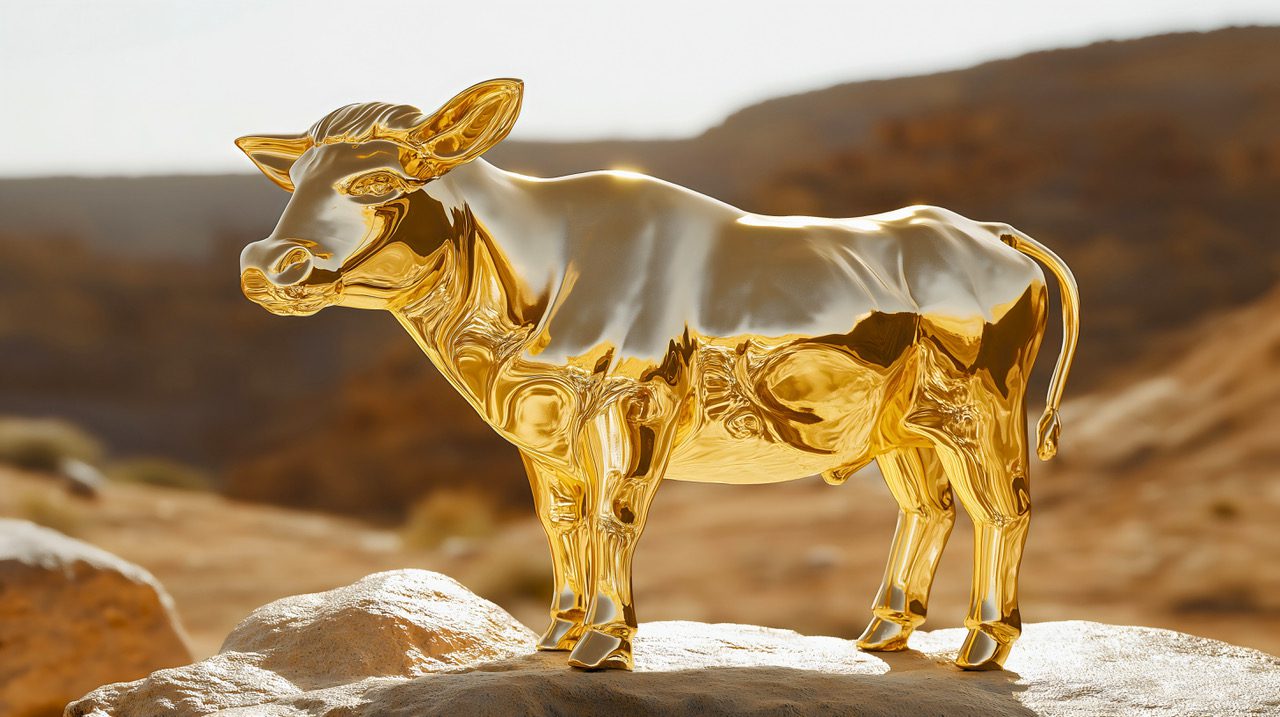
When Moses stayed on the mountaintop with God for a long time, the natives got restless. Their response was a desire for a “better god,” one they could see, so they asked Aaron to make them one. Did Aaron respond with, “What are you talking about? I will not do any such thing!” Not quite. He basically said, “Ok.” And then, ‘Take off your gold earrings.” He just gave in to their demands. Fear of man triumphed over fear of God, and when that happens, evil is sure to follow. As we read in Proverbs., “The fear of man lays a snare, but whoever trusts in the Lord is safe.” Aaron didn’t pray about their request. He didn’t consult the elders. He didn’t do anything but go along with the pressure of the crowd. His will was not settled in a desire for only God’s will, and that opens the door for the enemy every time. A leader without conviction gives sinful people what they want.
Young people, don’t listen to the voices around you, live or streamed, that tell you to do what you know is wrong. Be a man or woman of courage and conviction. Be a Daniel who would not give in even to the king’s demands with what he was to eat. Be like Shadrach, Meshach, and Abednego, who would not bow to the golden image while the rest of the nation was eating dust as they groveled before it. Be like Esther who went before the king without permission to plead for her people, saying, “If I perish, I perish.” Be like Jesus who did not give in to the crowd’s demands but did exactly what the Father sent him to do. When it comes to conviction about sin that others are inviting you into, be a leader not a follower.
The people gave their golden earrings to Aaron. And remember where they came from! These were part of the bounty, the plunder, that the people of Egypt gave to their former slaves as they sent them on their way. God gave them these riches for the building of the tabernacle, not for the practice of idolatry. But the people weren’t thinking about that, They craved the gods of Egypt, something they could see, even if it was something that was made with human hands. They also wanted a god they could control. And Aaron gave them what they craved. He fashioned it with a graving tool, and you wonder if God’s thunderous voice was in his ears saying, “You shall not make for yourself a graven image.” This was not the spirit-inspired artistry of Bezalel, this golden calf. This was the sin-inspired idolatry of a man ordained and appointed as the primary spiritual leader of a nation. It may have been a beautiful piece of art, but that was not the problem. The problem was that the artist perverted his skill to make an idol. It is a reminder to all of us that our gift can be our greatest blessing, or it can become our greatest curse. Whether it is artistry or intelligence or beauty or athletic ability or business acumen, or anything else that the world praises, we must devote it to God and his glory. Lest we end up worshiping the gift and not the Giver.
Think of this. The golden calf Aaron created did not even exist the day before. But to this lifeless image the people gave their worship and to this statue carved by a man they ascribed glory and power. Isn’t that what Paul said happens when we reject the Creator and exchange the glory of the immortal God for images? “Therefore God gave them up in the lusts of their hearts to impurity, to the dishonoring of their bodies among themselves, because they exchanged the truth about God for a lie and worshiped and served the creature rather than the Creator, who is blessed forever!”
We look at this and say, “Why? How? How could you throw away what you had with God for this? How in the world did you get there?” One day at a time. One corrupt thought at a time that instead of being held captive is allowed to run wild in their minds. One opportunity after another to trust God that instead is turned into a complaint against him. Or against his people. Or against his leaders.
Sin makes us forget the goodness of God. Sin makes us doubt the presence of God. Sin makes us ignore the treasures of God.
“Prone to wander, Lord I feel it, prone to leave the God I love. Here’s my heart, O, take and seal it, seal it for Thy courts above.”
October 26, 2025
On the Sixth Day God Created Artists
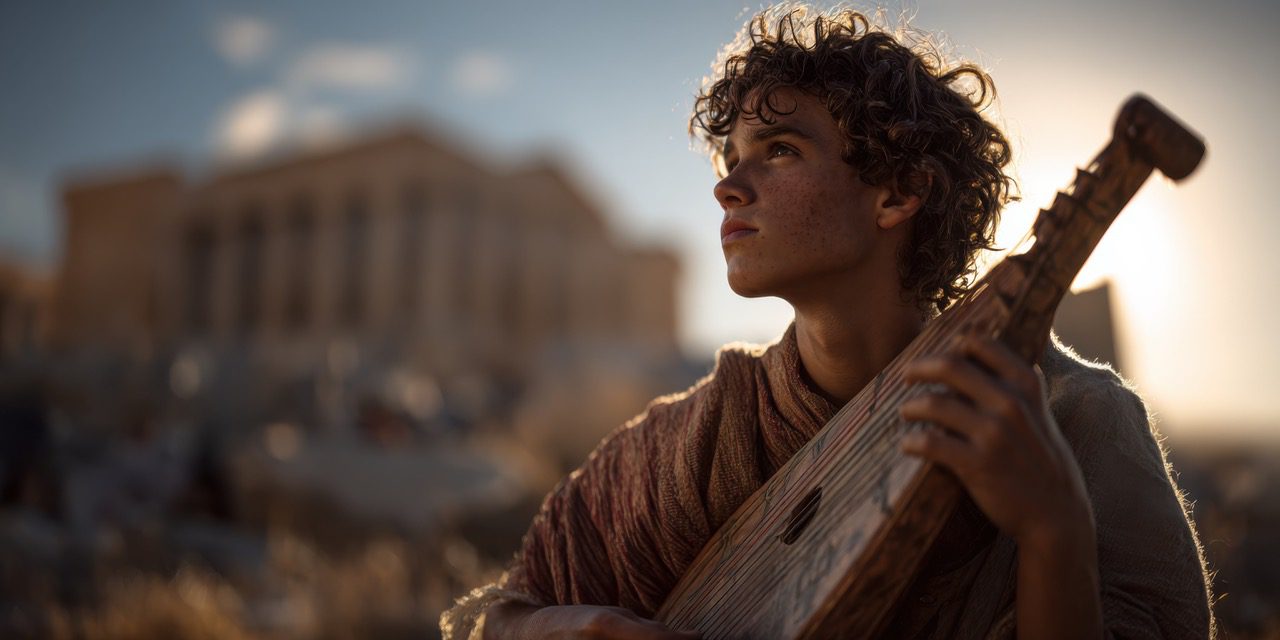
Because God is creator, we are given the ability to create as well. We are all artists. Our creativity and artistry can be expressed in many ways, from painting to sculpting to master carpentry to music to storytelling to acting to sewing to designing clothes…and the list goes on. Of course the artistic ability we are given varies widely as well. And I believe Exodus 31 gives us great help in developing a biblical view of art and artists.
First, you see there that God called two men by name, Bezalel and Oholiab. Just as Moses and Aaron were called by God to lead the people, these two craftsmen were called by God to lead in building the tabernacle and everything in it. Bezalel means “in the shadow of God,” and that is where he would stand as he did everything God told Moses to do in preparing this earthly home for God’s presence. Moses did not do it because it wasn’t his job and it wasn’t his gift. The tabernacle needed an artist to build it, not a prophet. Bezalel’s associate in this work, Oholiab, was called to the same task as an artist, and his name means “My Father’s Tent.” That seems appropriate: in the shadow of the Almighty, Bezalel and Oholiab built their Father’s tent.
Second, notice that these artists were gifted and their gifts came from God. Look at this. God said of Bezalel, “I have filled him with the Spirit of God.” This is only the third time in Scripture that the Spirit of God, “Ruach Elohim,” is mentioned. The first mention is in Genesis 1, when the Spirit of God hovered over the face of the waters. The second time was in Genesis 41, when the Pharaoh said Joseph must be the second in command because where else would we find man in whom is the “Ruach Elohim?” And Exodus 31 is the third time someone is said to be filled with the Spirit of God. But notice, this man filled with the Spirit was not a prophet. Or a priest. Or a king. He was a builder. A construction foreman. And an artist. And under his leadership, men and women would construct the tabernacle and all that was in it.
Don’t think these were men and women who had no ability and God instantly turned them into artists and craftsmen. That would be like me waking up tomorrow and knowing how to build a beautiful China cabinet out of cherry wood. You don’t want me anywhere near that project. No, they were already skilled in these things and God worked with them as he does with us and with our gifts. He refines our gifts and takes us deeper with them and repurposes them for his own glory. He sometimes takes people who have developed good leadership in the world and gives them a heart for leading God’s people with humility. He often takes people who like to serve and shows them how to do that in the church. For his greater purposes. God gives us ability and teaches us wisdom as we use the gifts he has given. The Spirit of God came upon David to play the lyre before King Saul. He didn’t suddenly learn to play the lyre; he had practiced for many years. And at the right time, God used that gift. I know the Bible has a few lists of spiritual gifts, but I think those are descriptive rather than exhaustive. And if the ability to make music or the ability to build something beautiful can be used by God for his glory, and we certainly see that in Scripture, then they are spiritual gifts as well. And if you are an artist, God will show you how to use that gift for his glory.
All of God’s people have abilities that God has developed for the purpose of building up his body and declaring his glory. We must not undervalue or squander those gifts.
October 19, 2025
Robe Dipped in Blood
I read a story of John Paton who was a missionary in New Hebrides, when after three years of living among, witnessing to and teaching a tribe that practiced cannibalism, he was ready to baptize his first converts. He wrote, “The twelve Candidates then stood up before all the inhabitants there assembled; and, after a brief exhortation to them as Converts, I put to them the two questions that follow, and each gave an affirmative reply, “Do you, in accordance with your profession of the Christian Faith, and your promises before God and the people, wish me now to baptize you?” And–“Will you live henceforth for Jesus only, hating all sin and trying to love and serve your Savior?” Then, beginning with the old Chief, the twelve came forward, and I baptized them one by one.” After that they sat for communion and John wrote, “For three years we had toiled and prayed and taught for this. At the moment when I put the bread and wine into those dark hands, once stained with the blood of Cannibalism, but now stretched out to receive and partake the emblems and seals of the Redeemer’s love, I had a foretaste of the joy of Glory that well-nigh broke my heart to pieces. I shall never taste a deeper bliss till I gaze on the glorified face of Jesus Himself.”
We have a glimpse of our holy communion finally consummated in Revelation. A great multitude in heaven rejoiced as God peeled back the veil to let John see what awaits us. And the multitude was crying out, “Hallelujah! For the Lord our God the Almighty reigns. Let us rejoice and exult and give him the glory, for the marriage of the Lamb has come, and his bride has made herself ready; it was granted her to clothe herself with fine linen, bright and pure–for the fine linen is the righteous deeds of the saints.” And the angel told John to write this: “Blessed are those who are invited to the marriage supper of the Lamb.”
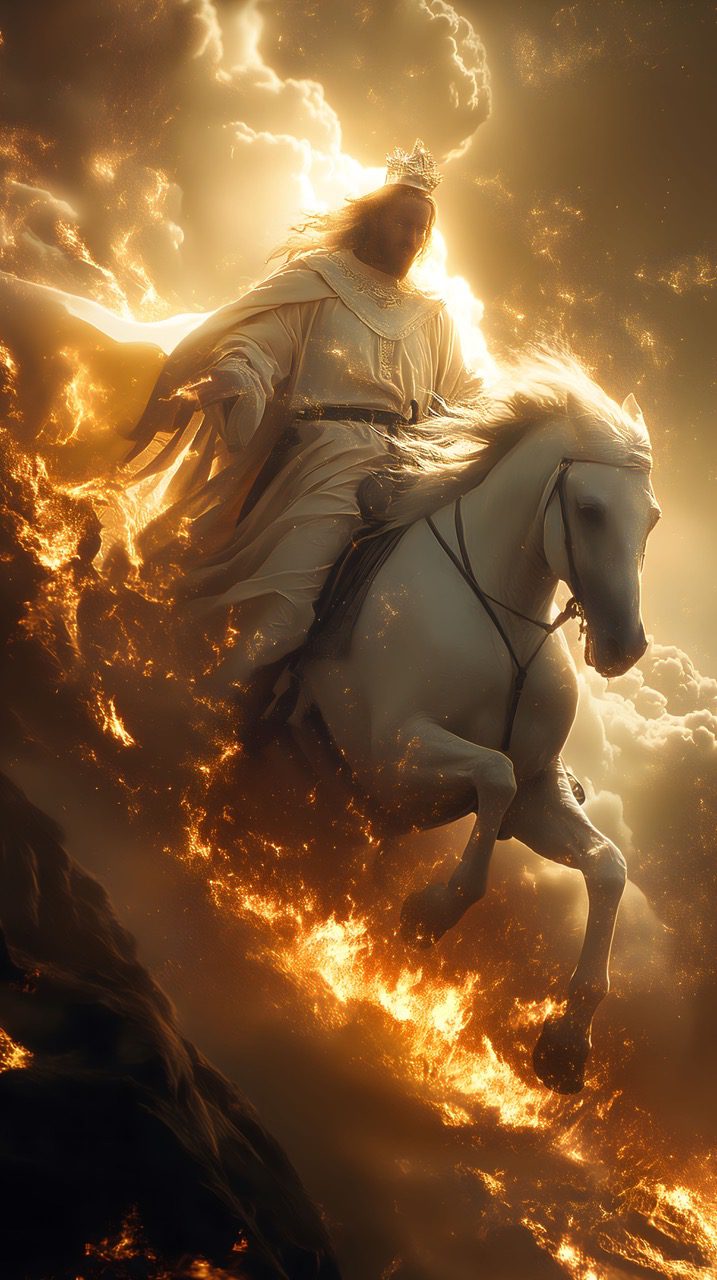
Somebody said, “I like the Old Testament. It reminds me of the New Testament.” And in Exodus 29, as God commanded Moses how to ordain the first priests of Israel, we are told that the blood of a sacrificial ram was sprinkled on Aaron’s garments and on his sons’ garments. The high priest and the priests wore the blood of the sacrifice they had made for atonement and for consecration. But it was not their blood. It was the blood of another that purified them to enter the holy place. It was temporary. One day this is what we will see with our own eyes, as John saw it himself in a vision: “Then I saw heaven opened, and behold, a white horse! The one sitting on it is called Faithful and True, and in righteousness he judges and makes war. His eyes are like a flame of fire, and on his head are many diadems, and he has a name written that no one knows but himself. He is clothed in a robe dipped in blood, and the name by which he is called is The Word of God. And the armies of heaven, arrayed in fine linen, white and pure, were following him on white horses. From his mouth comes a sharp sword with which to strike down the nations, and he will rule them with a rod of iron. He will tread the winepress of the fury of the wrath of God the Almighty. On his robe and on his thigh he has a name written, King of kings and Lord of lords.”
The one whose garments were soaked in his own blood that paid for your sins and mine will then be clothed in a robe dipped in the blood of his enemies. Christ will return as conquering King of kings and Lord of Lords who comes to rule and reign.
And believers, at that time, all will be restored. The one who delivers his people from sin will deliver his people, you and me, to everlasting life. As David wrote, “In just a little while, the wicked will be no more; though you look carefully at his place, he will not be there. But the meek shall inherit the land and delight themselves in abundant peace.”
October 13, 2025
O Precious is The Flow
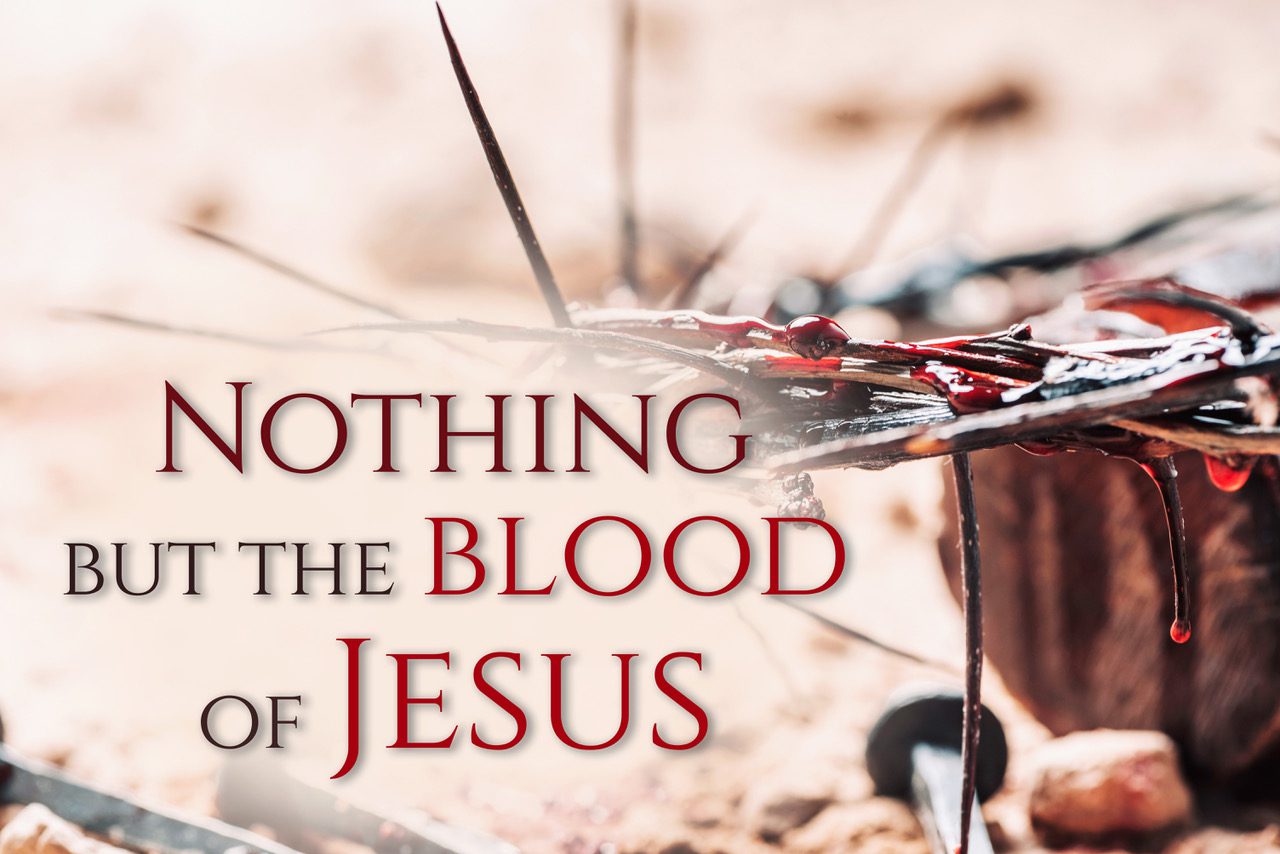
If you read Exodus 29 and think about what is described for just the first of seven days of sacrifices, the sacrifice of a bull and two rams, then you know the altar was filled with blood. It would have been shocking amount, and they were just getting started. The sight and the smell of all that blood would have been difficult for even the strongest of stomachs to endure. The priests laid their hands on the bull and the rams in turn before they were killed, each time transferring their guilt and their sin to these sacrificial animals. The truth that was burned into their minds with blood that could not be washed away was this: We need a sacrifice for sins. We cannot be righteous in God’s sight without a sacrifice of blood. Many, many sacrifices of blood. Because we are sinners. We aren’t sinners because we sin. We sin because we are sinners. It is who we are. So we back to the altar we go. Over and over again. There are very few religions that practice blood sacrifices today, although Orthodox Jews look forward to a Temple restoration with sacrifices again. But all the major world religions, Judaism, Islam, Hinduism, Buddhism, and Sikh teach that pleasing God is only possible through good works. They stress that there is no final and perfect atoning sacrifice for sin, one idea upon which they all agree or even dismiss altogether. “You must earn your way to heaven,” they all scream or chant or whisper. That is bad news for every one of us.
Thank God for the good news: Jesus Christ made a way for us. God sent His Son to us. “For our sake he made him to be sin who knew no sin, so that in him we might become the righteousness of God.” We lay our hands on Jesus by faith who took all of our sins away and made us new creations. I love the story of Charles Simeon who was a great preacher in England in the 18th century. But when he first went to Cambridge as a college student in the 1770’s, he was not a follower of Christ. He was shocked when he found out his first week of college that he would be summoned, along with all the other freshmen, to take communion in three weeks’ time. Simeon’s first thought was, “Satan himself is as fit to attend communion as I; if I must attend, I must prepare.” So he bought a Christian book called The Whole Duty of Man by an Anglican bishop and read it, crying out to God for mercy.
As he read the book, this sentence about the Lord’s Supper jumped out at him: “The Jews knew what they did when they transferred their sin to the head of their offering.” Simeon thought, What? Can I transfer all my guilt to another? Has God provided an offering for me, that I may lay my sins on his head? He began to seek this with Jesus. On Wednesday he had the hope of mercy; on Thursday the hope increased; on Friday and Saturday it became stronger. And on Sunday, Easter morning, he wrote, “I awoke early with these words on my heart and lips: ‘Jesus Christ is risen today! Hallelujah!’ From that hour peace flowed in abundance into my soul…and I had the sweetest access to God through my blessed Savior.”
O precious is the flow, that makes me white as snow; no other fount I know, nothing but the blood of Jesus.
October 5, 2025